
A common misconception among experienced DeFi users is that all browser wallets are essentially the same: a place to store keys and sign transactions. That’s convenient shorthand, but it misses the decisive technical layers—transaction simulation, approval management, and automated network handling—that change how you interact with smart contracts and measure risk. Rabby’s design emphasizes those layers. If you use a browser wallet for high-frequency DeFi operations, understanding how those mechanisms work and where they fail is more important than brand familiarity.
This explainer walks through how to download and set up the Rabby browser extension (Chrome/Chromium family), what the wallet’s simulation and security checks actually do, where Rabby’s current limits matter in practice, and a compact decision framework for when Rabby is a good fit compared with other EVM wallets in a US-based workflow.
How Rabby’s browser wallet and Chrome extension work under the hood
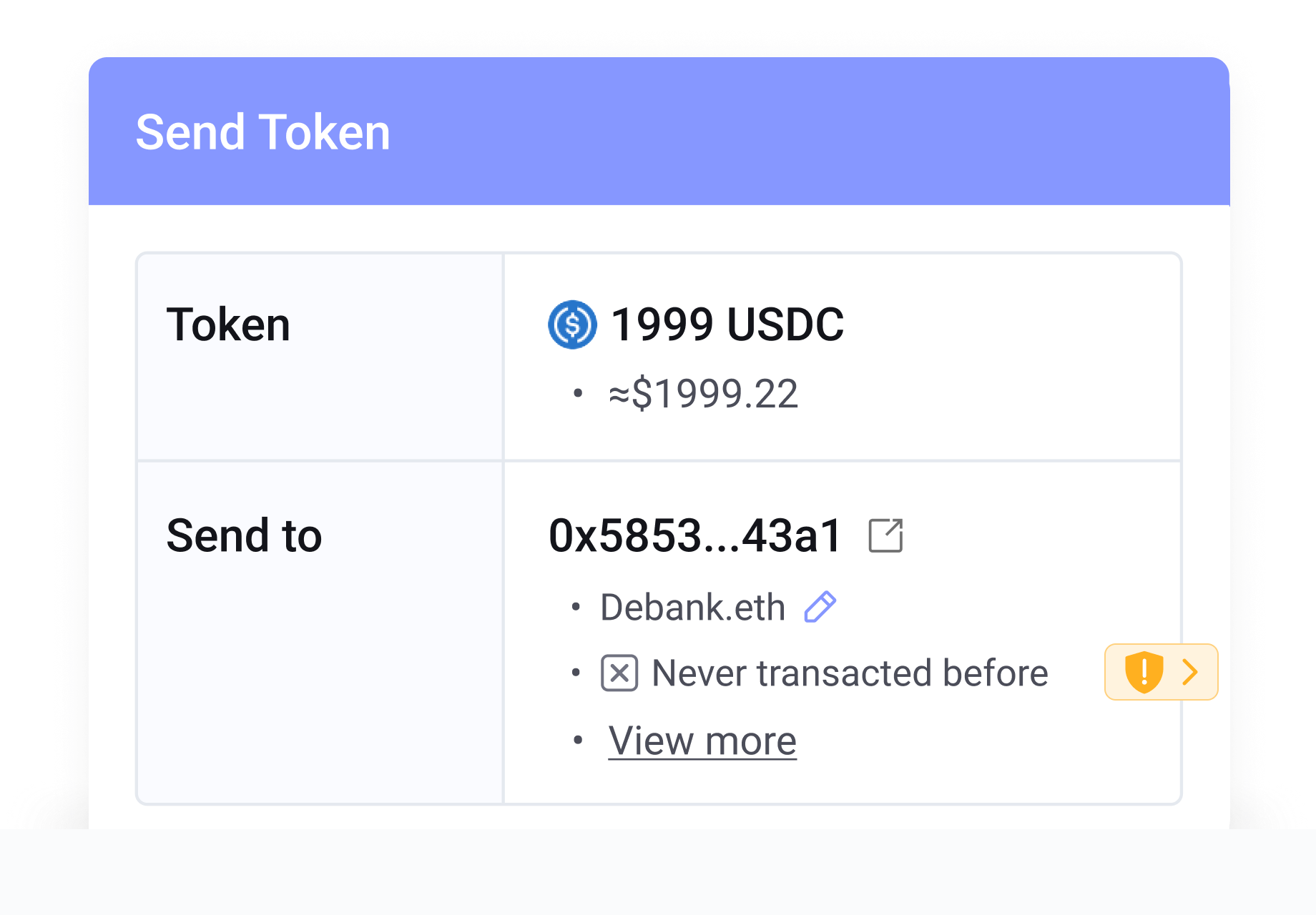
Mechanically, a browser extension wallet like Rabby holds your private keys locally and injects a provider into web pages so dApps can request signatures. Rabby is non-custodial: keys remain on your device rather than being held by a third party. What distinguishes Rabby is a pre-signing pipeline that intercepts a transaction request, runs a local simulation, and applies a risk-scoring engine before presenting a human-readable summary for approval.
The simulation estimates exact token balance changes and fee costs so you see a predicted post-condition of the transaction. This is not mere gas estimation: it reconstructs the call effects on token balances (to the extent the simulator understands the target contracts), which reduces the chance of “blind signing” a complex swap or permit. The wallet also runs heuristic checks—looking for known hacked contracts, suspicious approval requests, and nonexistent recipient addresses—and surfaces those warnings inline.
Practically, this pipeline trades off latency and completeness. Simulations require up-to-date chain state and correct ABI decoding; for obscure contracts or complex cross-contract flows, the simulation may be partial or conservative. When the simulator cannot fully resolve effects, Rabby typically shows estimated results with caveats rather than pretending to be certain. That honesty matters: you should treat negative simulation results as strong red flags and incomplete simulations as a prompt for manual review rather than a clean bill of health.
Download and platform choices: extension, desktop, and mobile
Rabby is distributed across three common surfaces: a Chromium browser extension (Chrome, Brave, Edge), a desktop client (Windows and macOS), and mobile apps (iOS and Android). For DeFi power users who rely on multiple tabs and frequent dApp interactions, the Chrome/Chromium extension is the most workflow-efficient—automatic network switching, integration with hardware wallets, and the Flip toggle for quickly switching default providers (e.g., Rabby vs. MetaMask) make it practical for heavy web-based usage.
If you want to download and test the extension, review source and installation guidance, and ensure you have the official build, start from an authoritative resource like the Rabby project page: rabby wallet. Always verify the extension ID and code signatures if you rely on a particular release channel; the wallet’s open-source MIT license makes independent audits possible but does not remove the need for operational caution when installing browser extensions.
Note on hardware keys: Rabby supports Ledger, Trezor, Keystone, and several other devices. For institutional or high-value personal funds, combining Rabby’s simulation and approval tools with a hardware signer reduces attack surface because private keys never leave the hardware device.
What Rabby’s security features actually prevent—and what it cannot
Rabby’s pre-transaction risk scanning and built-in approval revocation address two common vectors of loss. Many exploits begin with excessive token approvals (unlimited allowance to a malicious contract) or blind acceptance of a transfer-from that drains a balance. Rabby’s revocation tool and warnings help reduce these exposures by making approvals visible and revocable and by flagging suspicious approvals before signing.
That said, there are practical limits. Simulation and heuristic checks rely on pattern recognition and known incident databases. They are effective against known-issue contracts and many classes of logic errors, but they cannot prevent zero-day vulnerabilities in otherwise legitimate dApps or prevent user error when deliberately approving complex composite transactions. The 2022 Rabby Swap contract exploit—where a smart contract was exploited for about $190,000—illustrates two realities: (1) even wallets with advanced features can be connected to vulnerable contracts; (2) developer response (freezing the contract, compensating users, improving audits) is part of the security lifecycle but does not retroactively eliminate all risk for users who interacted earlier.
A practical decision framework for DeFi power users
If you trade, provide liquidity, or interact with composable DeFi protocols often, use this quick rubric to decide whether Rabby is a practical tool for you:
- Frequency and complexity: If you sign many multi-step transactions daily, Rabby’s simulation saves time by surfacing exact balance changes—value: medium–high.
- Institutional needs: If you require multi-sig or safe custody, Rabby integrates with Gnosis Safe and enterprise providers—value: high for teams.
- Hardware key usage: If you want hardware-backed keys and a browser UX, Rabby supports major devices—value: high.
- Fiat on-ramp and staking: If you need native fiat purchase or in-wallet staking, Rabby currently lacks those features—value: low for those needs.
Use the checklist: run simulations on unfamiliar dApps, check approval lists before large interactions, prefer hardware signing for high-value moves, and keep small “operational” accounts for routine approvals while isolating cold or long-term holdings.
Where Rabby sits among alternatives and what to watch next
Compared with MetaMask, Trust Wallet, or Coinbase Wallet, Rabby’s distinguishing mechanisms are transaction simulation, automatic network switching, and visible approval revocation. Those features reduce cognitive load and lower some risk types, but they are not magical. Adopted at scale, such features can shift attacker incentives (for instance, pushing attackers toward supply-chain or extension-injection vectors). Watch for two signals: (1) improvements in simulator fidelity (handling multi-contract flows and cross-chain composability better), and (2) broader integration of formal verification or on-chain attestations that can be surfaced in the wallet UI.
Regulatory and operational context in the US also matters. As wallets add institutional features and custody integrations, expect more scrutiny on compliance rails and KYC when fiat on-ramps are introduced. Rabby’s current lack of a built-in fiat on-ramp keeps it in a cleaner non-custodial posture for now, but that could change if users demand tighter bridges to on-ramps.
FAQ
How do I safely download the Rabby Chrome extension?
Download from an official source and verify the extension metadata. Because browser extensions can be impersonated, prefer the official project page and cross-check any extension ID with repository or developer documentation. After installing, test with small transactions and enable hardware signing for larger amounts.
Does Rabby prevent all smart contract exploits?
No. Rabby’s simulation and risk checks reduce exposure to blind signing and known-bad contracts, but they cannot eliminate zero-day vulnerabilities or attacks that exploit legitimate contract logic. Treat the wallet as a risk-reduction layer, not an absolute shield.
Can I import my MetaMask wallet into Rabby?
Yes. Rabby supports importing via seed phrase or private key and includes a Flip toggle to switch default providers. When importing, follow key-hygiene best practices: do it offline or on a clean device, and consider moving funds gradually to confirm everything behaves as expected.
Is Rabby suitable for institutional use?
Rabby integrates with multi-sig and enterprise custody providers like Gnosis Safe and Fireblocks, which makes it a reasonable component in institutional workflows. For large-scale custody, combine Rabby’s UI and simulation features with enterprise custody and governance layers rather than relying on the browser extension alone.
Takeaway: Rabby is a purpose-built, non-custodial wallet that surfaces transaction-level mechanics many other wallets leave hidden. For a US-based DeFi power user, its simulation, approval revocation, multi-sig integrations, and hardware compatibility offer real operational advantages. The wallet’s limits—no native fiat on-ramp, incomplete threat coverage for zero-days, and dependence on simulation fidelity—mean you should still follow layered security practices: hardware keys, compartmentalized accounts, and skepticism toward unfamiliar contracts. Those habits, combined with Rabby’s tools, materially lower but do not eliminate the hard risks of DeFi.
